Climate Solutions Friday – Sept 3

I’m going to be frank, the past 2 weeks have been pretty awful. Between the chaotic and tragic scenes in Afghanistan, the terrible Supreme Court abortion ruling, the rise of people using horse de-wormer instead of an FDA approved vaccine, and the powerful, deadly hurricane I’m feeling more than a bit overwhelmed. So many people are more personally and acutely effected than me. I’m not an Afghanistan veteran or part of a Gold Star family, I don’t personally know anyone who has died of Covid-19, I wasn’t hit hard by the hurricane, and I don’t have a uterus. I recognize that all of these things are essentially priviledges for me. Still, watching these mostly preventable things happen in real time is hard to watch. Knowing that I have it easier than other people gives me no comfort.

I think it’s important to understand the role that politicians have played in all of these events. Warmongering politicians got us into Afghanistan in the first place. Anti-woman politicians passed the Texas abortion law and appointed the anti-woman justices. Anti-vaccine politicians are promoting the horse de-wormer. And climate denying politicians have prevented us from doing anything about climate.

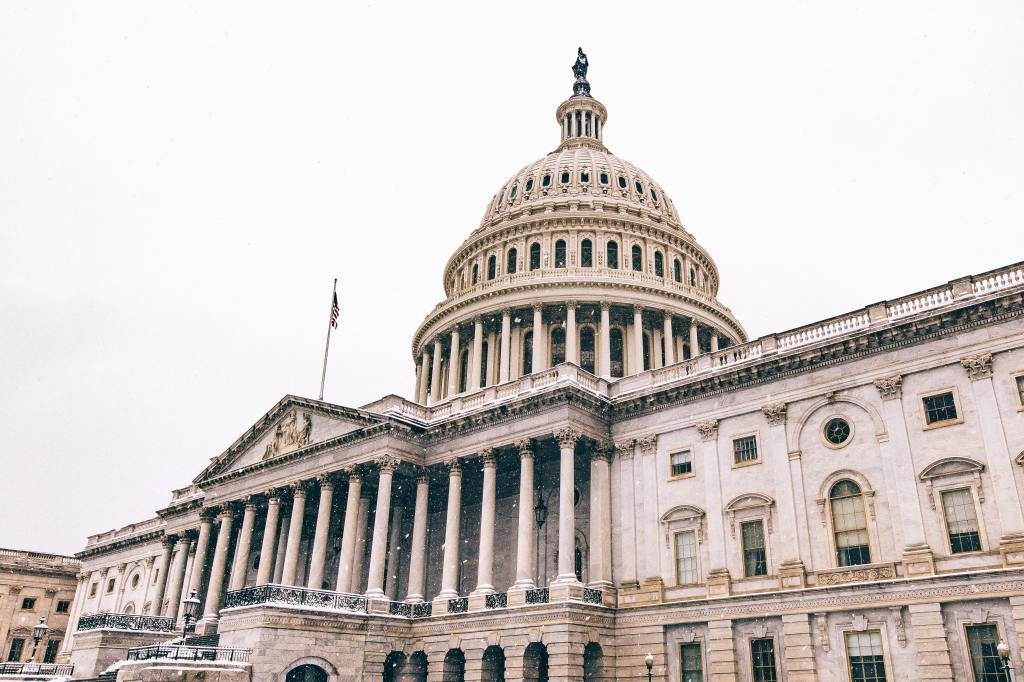
Even this week, Senator Joe Manchin published an infuriating op-ed in the Wall Street Journal, a fitting place for such a piece, stating that Democrats should hit the pause button on their $3.5T spending package. This package includes President Biden’s two signature climate policies: the clean energy payment plan, and the extension of the clean energy tax credits. Even these two market-based schemes will probably be inadequate, but it’s the best he could do under the Senate’s crazy, anti-democratic structure.

And now Manchin’s op-ed has put us on our heels at the last minute. Is he bluffing? Is he just trying to appear “fiscally conservative”? In Manchin’s defense, he has a tendency to make big, bold proclamations challenging Democratic leadership only to vote along with his party when the time comes. Maybe that’s why his Senate colleagues aren’t ringing alarm bells.

If he and the other so-called moderates need to extract their pound of flesh, then so be it. But there’s a limit.

I apologize for sounding so negative in a climate solutions post. As I said, I’m feeling a little overwhelmed.

The most important thing we can do for the climate is elect leaders who will take the issue seriously. In a perfect world, Democrats, Republicans and third parties would all work together on this issue. We’d be arguing about how to fight it, not whether or not we should.

If you’re a Republican or know a Republican, encourage them to vote in primaries. Vote for candidates who acknowledge climate change and want to do something about it. If you’re a Democrat, do the same in Democratic primaries. But more importantly, vote in as many primaries and elections as you’re legally allowed. Every level of government has a roll to play, and lower level elections, like the recall in California or the state elections in Virginia that are both coming up soon, tend to have very low turnout. Cities and state legislatures have the ability to make great progress on these issues, but the most reliable voters tend to be older and more conservative.

Climate change is fundamentally a political problem. We don’t need some magic technology, we have solutions already. We need to implement them as soon and as widely as possible. Every president since LBJ has known about climate change and every president since LBJ has failed miserably to address it. Some presidents, notably Ronald Reagan and Donald Trump, actively worked to make things worse.

We’re running out of time to get this right. Vote, march, organize, run for office, do something to get the needle moving. Politicians who deny climate action must be punished at the ballot box. Systems that unfairly allow those politicians to stay in power must be altered.

Climate Solutions Friday: Green Consumerism

In the past decade or so there has been an explosion of products labeled “green” or “sustainable” which promise to reduce your environmental impact without sacrificing your way of life. Neither of these labels is a protected term so there is little meaning to either of them, particularly in a consumer setting. The evidence that these green products are less harmful for the environment is not extremely strong, and arguably they may actually be worse for the envirnoment in the long run by encouraging more consumption.

You see, overconsumption is the root of our environmental crises. Simply put, we cannot consume our way out of this crisis, because consumption is the problem. But these marketing campaigns give some of us the illusion that we’re living “sustainably” because we’re using “sustainable” products. This is called greenwashing.

Now, sometimes these green labels are accompanied by third-party standards like the Rainforest Alliance. Theoretically, this is a good thing because it means at least someone is creating a standard and doing an audit of the product to make sure it meets that standard. I’m not an expert on the labels and I’m in no position to evaluate their efficacy. That being said, no amount of green standards is going to alter the fact that we’re consuming too many resources to have a sustainable civilization.

When I was growing up, we were taught to limit our ecological impact by following the three “Rs”: Reduce, Reuse, Recycle. Now, I didn’t know this at the time, but those three are listed by their relative importance. Reduce comes first because it’s the most important and the most impactful, followed by reuse and then recycle. In our society we tend to put most of the emphasis on recycling, because, just like with “sustainable products” it doesn’t require us to make any material changes to our daily lives. Recycling sounds like a good idea, but in many instances it’s little more than greenwashing.

So where does that leave us? What is the opposite of hyper consumption? Minimalism.

Now, we live in a society without a state religion, but consumption is damn near the de facto official American faith. Just think about Black Friday. Thanksgiving is meant to be a day of giving thanks, of reflecting on what we have, on reconnecting with family or friends, and showing gratitude. Yet, before Thanksgiving is even over, we immediately transition into Black Friday, which starts on Thursday, and symbolizes the insane, hyper consumption at the heart of the American ethos.

So, when I say we should cut our consumption, I’m fully aware of just how un-American it sounds. I’m also aware that it may go over like a lead balloon. I don’t care.

I think deep down, most of us realize that this hyper consumption isn’t making us any happier and it isn’t making our lives better. Americans never score well on happiness indices, and having lots of unnecessary stuff doesn’t really increase our quality of life.

That’s not to say that wealth and things do not increase happiness at all. Far be it from me, a comfortable, privileged white cisgender American man to preach that wealth and comfort don’t bring happiness. It’s just that, once our material necessities are met (this includes things like internet access, entertainment, and education, as well as food, water, shelter, etc) more consumption doesn’t really make us happier.

My question then is, what is the point of all this consumption if it doesn’t make us happier and it’s killing our environment?

If we want to change our lives for the better and reduce our ecological footprint, then we need to change our consumption habits. As famed organizer Marie Kondo frequently asks, “does this spark joy?” When thinking about our possessions and about things we might buy, we should stop and think how much joy this thing will bring. If we’re not sure, we should see if we can test it out. Of course that won’t always be possible, but, just as with plant-based eating, the more we reduce our consumption, the better it is for the environment. Over time we may find that we really don’t need all of these “things” in our lives, and if it makes us happier, we’re turn it into a habit.

However, as I’ve said before, if we really want to change American consumption habits, we must look at policy changes. In the near term, it is good for each of us to evaluate our own choices and habits, but durable, long-term solutions are only achieved through collective action, cultural change, and policy.

Climate Solution: Plant-Based Eating

It often feels like there is nothing we can do about climate change. It seems like our individual actions are kind of meaningless in the face of such a huge problem. It’s true that none of us, on our own, is going to solve this problem. It will take policy and collective action. However, that doesn’t mean there’s nothing we can do as individuals to move our society forward. Collective action is really just a group of individuals making individual actions. And, while I’ve said over and over that policy is the best approach for solving these issues, I still think we as individuals can and should examine our own habits. We should try to lower our own carbon footprint, because ultimately that’s what it’s going to take to get where we need to go. So I’d like to present you with a series of personal actions we can take to lower our own emissions. Let’s start with one of the easiest and quickest things we can do: eat more plants, aka “plant-based eating.”

Your first thought when you hear “plant-based eating” might be vegetarianism or even veganism. Your second thought is probably something like “no thanks” or “don’t tell me what to eat.” There’s no denying that most people love meat and dairy, and we live in a society that prides itself on a meat-heavy diet. We see it as a symbol of wealth, abundance, masculinity, even patriotism. No generation in the history of the world has had such easy and cheap access to meat.

Meat and dairy both have a huge environmental impact. Red meat in particular (beef and lamb) has the highest impact. Beef production is the leading cause of deforestation and biodiversity loss on the planet. Meat production is also subsidized both explicitly through feed subsidies, and implicitly through regulations that allow for animal and worker abuse, pollution, and other impacts to be externalized.

The government should step in and stop subsidizing meat immediately. Cheap meat is generally a bad thing for the planet and for our health. That being said there are obviously equity issues. For most of human history, the rich ate whatever they wanted and common people were limited to meat on special occasions or not at all. We don’t want to return to this stratified way of eating.

However, the amount of meat that we consume is simply unsustainable. The research on this is overwhelming so I won’t belabor it here, but given existing technology, there is no way we can continue to eat meat on this scale without destroying our own ecosystem. Fortunately, cutting meat and dairy consumption in rich countries is fairly easy. If you want to reduce your carbon footprint (along with your general ecological footprint) the easiest thing to do is cut your meat and dairy consumption.

But for most of us, eating without meat might seem hard. Won’t you still be hungry? Will you get enough nutrients? What about protein? Will it even taste good without meat? Maybe you don’t know how to cook without meat, or maybe you don’t cook at all and there are now vegetarian restaurants nearby. Rest assured, it’s probably a lot easier than you think.

There are at least two strategies you can try. First, you can simply reduce the meat or dairy portion sizes. If you order a hamburger at a restaurant, cut it in half and save half for later. Stretch that burger into two meals. Or make smaller portions if you cook at home. Rather than making meat the centerpiece, think of it as compliment or side dish, with vegetables front and center. This way of cooking is common, even in advanced countries like Italy, France, South Korea, and Japan. You can think of this as an opportunity to learn new cuisines.

My preferred method, however, is to simply eat vegetarian most of the time. It’s easy, you don’t need to measure anything or weigh your meat portions, and it’s structured. I eat meat once or twice a week. I don’t change my portion sizes and I don’t feel guilty about eating it. I usually eat meat on Friday or Saturday, when I’m out with friends. To be honest, I don’t miss eating meat every day. I know I can have a hamburger or a steak or whatever whenever I want, so I don’t feel pressure to get one. Further, I’ve spent years learning how to cook and order vegetarian dishes so I have a large repertoire of options to choose from. I also live in a place where it’s easy to find vegetarian options at restaurants, which I know isn’t true of everyone. And I have the income to buy whatever fresh fruits and vegetables I need, which again is not true of everyone.

I recognize that I have privilege here. I also don’t expect everyone to cut their meat consumption by 70+% the way I have. But, any effort to cut your meat consumption is worth doing, even if it’s only once a week.

The process can either be immediate or gradual. We all live very hectic, stressful lives and completely changing the way we eat and cook overnight would be pretty hard to do. Fortunately, it’s not necessary to change everything right away. My advice is to think about how often you eat meat. Is it daily? Is it multiple times a day? Is it with every meal?

Then think about the meals you enjoy (if any) that are vegetarian. What do you like about them? How often could you eat them?

Next, start exploring similar meals. Try to switch out one meal per week from omnivorous to vegetarian (or vegan if you’re feeling ambitious). Perhaps you can try something new every week, whether you order it from a restaurant or make it at home. You’re not going to like everything, and that’s fine, just keep trying new things.

If you feel even more ambitious, maybe try to cooking with something you’ve never used before, like tofu or tempeh. If you have used them before, then start exploring more dishes and more ways to cook them. We are awash in Youtube videos and cookbooks that can teach us how to cook with these ingredients.

Over time, you can build up a rotation of meals that you (and hopefully your family) enjoy eating. Be ruthless about it, if they don’t like something, then don’t make it again, but keep trying.

Over time you get more and more comfortable cooking without meat, or discovering what restaurants have vegetarian options you enjoy. Like I said, gradual change is totally fine.

And you don’t have to eat like me. Even replacing one meal a week is good, two meals is great. If you get to a point where most of your meals are vegetarian, then that’s wonderful. If you think about it, you could eat meat every day for one meal and 2/3 of your diet would be vegetarian. The average American eats about 6.3 oz of meat per day, that’s almost two recommended servings. If you cut it to one 3.5 oz serving, you’d be eating barely half the average. If everyone did that it would have a huge positive impact.

Also, you shouldn’t think about it as a sacrifice, I certainly don’t. The goal is not to punish yourself for eating meat, you should think of it as an opportunity to explore new flavors and new ingredients. For almost all of human history, most people were vegetarian a majority of the time. Over the centuries, we have invented myriad delicious meals with little or no animal protein. And we live in a time of great recipe abundance.

I personally enjoy getting cookbooks from the library and testing them out. For major cookbooks like Mark Bittman’s How to Cook Everything there are often vegetarian versions like this one. Sweet Potato Soul is good book offering vegetarian versions of classic Southern cooking. I’m currently using The Vegetarian Silver Spoon for my Italian recipes. The list of books is almost endless. Eating should be a joy, a celebration of flavor. Meat isn’t necessary to have a wonderful taste experience.

If you’re concerned about nutrition, then there are good resources out there (beware though, a lot of “plant-based” writing is very biased. Stick with neutral nutrition and science-based organizations like medical schools or dieticians). In reality, while plant-based diets are usually healthier than the typical American diet, for some people they may not be healthy. Everyone is unique and so are our nutritional needs.

If you’re just not interested in having smaller portions or going without meat a few times a week, then you can still reduce your diet’s carbon footprint. Cutting red meat is the next best thing. Going pescatarian would be even better, as fish and especially shellfish have much lower carbon footprints than land-based meats. Smaller fish like sardines and anchovies have a smaller footprint than big fish like tuna or salmon. Bivalve shellfish like oysters, clams, mussels, and scallops are probably the most sustainable animal protein on the planet.

One way or the other, our diets will have to change. No matter who you are or where you live, you can make a difference by eating a little less meat. You can feel good about it, knowing that not only would it have climate benefits, but it will also benefit a plethora of other ecological issues like deforestation, biodiversity loss, ocean acidification, marine dead zones, and others.

The Next 3 Months

I’m not exaggerating when I say that the next 3 months may be the most important months of our lives. They may determine once and for all if we will contain the climate crisis or if we let it roar onward. 3 months from today, we’ll know if the COP26 climate conference was a success. But in order for that to happen, we must take care of business here at home.

Right now is crunch time for climate action in the United States. Democrats control the House, Senate, and White House for the first time since 2011. Based on historical patterns, the Republicans are likely to capture one or both houses of Congress next year, and most of 2022 will be focused on re-election campaigns rather than legislation. At this moment, there is a concerted push by President Biden to pass both his Bipartisan Infrastructure Plan, and his partisan reconciliation bill. Republicans continue to show zero interest in combatting the climate crisis, and I don’t think that’s going to change anytime soon. So our best hope for action lies in these two parallel pieces of legislation.

The BIP, while not directly related to climate, does have a number of climate-friendly features, including the largest federal investment in Amtrak and mass transit in history, billions for the electrical grid and electric vehicle charging, along with money to modernize infrastructure in the face of extreme weather.

The reconciliation package is where the meat of President Biden’s climate agenda is, and it would represent by far the largest federal investment in climate action in US history. It sets a goal that the power sector will be 80% “clean” (meaning solar, wind, hydro, and nuclear at the least) electricity and the economy see a 50% reduction in carbon emissions by 2030. Some of the highlights include:

  • Direct payments to utilities that are moving away from fossil fuels, and penalties for those moving too slowly.
  • A Clean Energy Technology Accelerator designed to advance needed low-carbon technologies.
  • Extension of clean energy tax credits
  • Decarbonize the federal building portfolio and vehicle fleet
  • Money for using agriculture and forestry to sequester carbon

The policy of direct payments to utilities is the centerpiece. Under the reconciliation rules, Congress cannot pass a “clean electricity standard” which would mandate that a certain percentage of our power come from clean electricity. The next best thing is this series of payments and penalties to utilities, which is what the Biden admin is proposing.

Simply put, the BIP and the reconciliation bill dwarf any previous federal action on climate, and if the president can get them passed this year, and if he wins reelection in 2024, he would have 7 years in which to implement the spending. Scientists say we need to cut our greenhouse gas emissions 50% by 2030, so President Biden has a chance to put us on course for that.

If he’s successful, it will set a number of industries on near-irreversible paths towards a low carbon future. If car companies spend the next 7 years investing and marketing EVs, it’s unlikely they will switch back to internal combustion engines. If every coal plant in America goes out of business, then it’s unlikely anyone will build new coal plans (at least here). I write a lot about “tipping points”, usually as a warning, but there are also positive tipping points. Decarbonizing the entire economy is slow and plodding, a bit like turning a supertanker, but once we start making the turn, our momentum will make it hard to stop.

Of course, there is always the possibility that the reconciliation bill will lose its climate provisions. This would be a catastrophe. We simply cannot allow that to happen.

The other part of the equation is the COP26 in Glasgow, (“COP” stands for “Conference of Partners”, it isn’t a very good name). You may remember the “Paris Climate Agreement” from 2015. That was a product of COP21 in Paris. COP26 is the first such conference since President Trump, a noted climate denier, left office. The US essentially abandoned climate policy during the Trump years, and the rest of the world moved on.

But things aren’t moving fast enough. America’s absence has been a problem and much of the world no longer takes us seriously as a global leader. If the Biden Administration wishes to be taken seriously at COP26, then he will need to pass major climate legislation before then. A failure to pass such legislation, particularly during a year where the climate crisis has beaten us over the head since February, would be a devastating blow to US credibility.

Robust climate legislation will increase our chances of a strong COP26 summit, but an embarrassing US failure to legislate would likely doom the whole endeavor to irrelevance.

And this opportunity may not come again. If the GOP wins the midterms next year, they may hold on to one or both houses of Congress for several cycles (after winning the House in 2010, they held on to at least one house of Congress for 10 years until the 2020 election). I’ve learned through much bitterness to never overestimate the average voter. I have very little hope voters will punish the GOP for its idiotic anti-climate shenanigans. 10 more years of business as usual would quite literally exhaust our carbon budget. Of course, it’s never too late to do something but the goal here is to minimize the damage.

If President Biden can get these packages passed without too much compromise on climate, then I will rest easy for the time being, knowing we’re finally on the right path. If he fails, I’ll buy myself an expensive bottle of whiskey and toast to what could have been.

I have been pleasantly surprised by President Biden’s commitment to climate action, and I think he deserves the benefit of the doubt for now. Even if he is successful, there will still be an enormous amount of work to do, but at least we’ll have a fighting chance.

Our Three Options

Our options for dealing with climate change fall into three broad categories: mitigation, adaptation, and retreat. The amount of mitigation we do will determine whether we adapt or retreat. It’s quite simple, the more mitigation we do in the near term, the less retreating we’ll have to do. Whether we choose to stay or not, we will be spending a great deal of time and energy on adapting to the changes.

Mitigation is the first option. It’s what most people think of when they think of “climate action”. It’s what we should have been doing for the past 50 years rather than burning an ever-increasing amount of fossil fuels. Mitigation means reducing our greenhouse gas emissions, until we reach carbon negativity (drawing more carbon from the atmosphere than we emit). If this were 1980, I’d advocate for throwing all our resources into this option. Back then we still had time for this approach.

While we should obviously still put resources into mitigation, after all the more carbon we emit, the worse things will get, we can no longer put all our eggs in this basket. As I’ve said, climate change is already here. The weather is already weird and getting weirder, and it’s too late to stop things from getting worse in the near term. Mitigation should remain our top priority, especially since global carbon emissions continue to increase. The sooner we cap our emissions and begin drawing them down, the better.

The second option is adaptation. This is already happening in many places. This means building resilience, it means changing our society in order to deal with the new reality. Adaptation can take many forms, here are just a few interesting examples:

In low-lying places like Bangkok and the Netherlands, they have designed parks that double as huge rainwater collection systems. These parks are designed to flood when it rains and divert water from homes and businesses. However, they also serve as recreational areas when the water level is lower. Increasing green space and building resilience against flooding.

Inspired by the “Victory Gardens” during World War II, people have begun planting “Climate Victory Gardens” which serve as both mitigation and adaptation. These gardens reduce our dependence on fossil fuels and build resilience against disruptions to the food supply chain.

Residents in California have begun fireproofing their homes in anticipation of increased and unrelenting wildfire activity now and in the future.

There are many more examples of adaptation. Some of them are being done by a city or state governments, others are being implemented by non-profits, individuals, and even businesses. However, adaptation is not always the answer. Once must way the cost of adapting against the likelihood of success.

That brings us to the final option: retreat. This means, quite simply, abandoning places that are no longer suitable for human activity. This is by far the most controversial and difficult of the three options. In reality, a lot of people live in places that are not overly suitable for human habitation, like flood plains, deserts, fire zones and the like. It didn’t make sense when people first moved to these places, and it will make even less sense in the future.

Some places will simply become uninhabitable. For example, Southeast Texas has been hit by five so called “500 year floods” since 2014. While a major city like Houston is probably not going anywhere (they will be taking the “adaptation” approach), there are certainly smaller and poorer towns that won’t be able to cope with the flooding. Their homes may become uninsurable, the government may use eminent domain, or the people may simply get tired of rebuilding.

This is true of several regions around the country, including the majority of costal areas and towns. NOAA projects that the best case scenario is 12 inches of sea level rise by 2100. Under a business as usual scenario, that projection rises to eight feet which would be catastrophic for nearly every coastal community on Earth. Sea level rise is only one of the factors coming for coastal areas, they’re also highly vulnerable to the bigger, stronger, and wetter storms that we’re already seeing. Storms that are going to get worse.

In other parts of the country, the issue will be lack of water, or fires, or mudslides. Big, rich communities may be able to adapt, but other communities will simply waste away. Surely much of this retreat will be involuntary, but we may also begin retreating proactively, this is called managed retreat. It allows government programs to assist with relocation, and ideally it saves lives, both literally and financially.

Managed retreat is obviously a controversial topic, especially in a country that prides itself on giving its own government the middle finger as often as possible. But, unfortunately, it’s already becoming necessary. Private insurance is refusing to insure properties in a growing number of disaster-prone areas, and I expect that trend to accelerate in the future. It would be very bad policy for the government to swoop in and insure these properties rather than just helping people move (and ideally purchasing the property for a fair price).

Which of these three options we choose will depend on a great number of factors. Of course, mitigation remains supremely important, but we’re past the point where we can simply mitigate and expect things to stay the same. We need to determine which places are worth protecting and which places are simply too costly for us to remain.

Unfortunately, many of the states that are most at risk have chosen to elect leadership that barely acknowledges climate change, and is unlikely to doing anything proactive. This means that it is incumbent upon each of us to evaluate the risks that we face due to climate change, and determine our own best course of action. If we think we live in an area that will become uninsurable, it makes sense to leave sooner rather than later. If we think we handle what’s to come, then it makes sense to begin adapting, whatever that means.

Of course, I realize that many people simply don’t have the resources to adapt or to move. And others may not really care because they don’t expect to live long enough for it to matter. For those of us who expect to be here for another 40-50 years or more, these decisions will be critical for our long-term safety and prosperity.

Energy Basics: Nuclear Power

To many people, nuclear power is a terrifying force that threatens our very existence. To others, it’s the only power source that can possibly meet our climate goals. I think it’s safe to say that no single technology divides climate activists more than nuclear power.

Unfortunately, most of the commentary around nuclear is extremely hyperbolic, and for lack of a better word, “partisan”. It probably doesn’t surprise you that I am something of a “centrist” when it comes to nuclear. Let’s look at the arguments.

First, there are two types of nuclear power. Nuclear fusion involves merging two light elements into a single, slightly heavier element. In practice, this means merging two hydrogen atoms into a single helium atom. Nuclear fission involves splitting a very heavy atom (typically uranium) into a lighter atom.

Nuclear fusion is the process that powers our sun and all other stars. There are billions of dollars being spent to develop nuclear fusion reactors. Unfortunately, they remain science fiction. There are no working commercial nuclear fusion reactors and given the timelines involved, it’s very unlikely that fusion will have an appreciable impact on climate change mitigation.

Every nuclear power plant every built uses fission. Fission releases an enormous amount of energy, but also creates radioactive waste. And we all know that fission reactors can melt down, as we’ve seen in Chernobyl and Fukushima. So, why would someone support nuclear fission if it seems so dangerous? Well, actually, fission is safer than any other kind of energy, including wind and solar. There are fewer deaths per megawatt of energy produced than for any other source. Nuclear also offers some very important benefits for climate. It doesn’t produce any air pollution or carbon emissions. It offers continuous, reliable and stable power, even at night and even when the sun is not shining, or the wind is not blowing. It’s the only scalable power source that offers the reliability of fossil fuels with the climate benefits of renewables.

It’s because of these reasons that fission has a small but very passionate group of advocates. However, in many cases, these advocates overemphasize the benefits and downplay the negatives for nuclear. The two most significant hurdles for nuclear power are cost and perceived safety. In order to build and site enough nuclear power plants to significantly lower our carbon emissions, we would need to convince hundreds of millions of people worldwide to let us build a nuclear plant near their homes.

Nuclear as I’ve said is very safe, but the perception is what matters. I don’t think we have enough time to convince enough people to let us build enough nuclear plants. I might be wrong, in this. But remember, we only have a couple of decades, and building, permitting and commissioning nuclear plants takes years, even if the local population is supportive. I suspect we would see the mass mobilization of people against building new nuclear plants unless there was a highly effective and widespread education campaign.

But even then, we would still be dealing with the cost issue. Nuclear is extremely expensive and renewables are exceptionally cheap (as is natural gas). If we built an entire fleet of nuclear plants, average electricity prices would almost certainly increase. Meanwhile, renewables and energy storage are both getting cheaper.

Fortunately, we don’t need to choose. Actually, nuclear and renewables can compliment one another. It makes no sense to choose a single power source for every situation. Regulators and investors should be allowed to choose the zero-carbon energy source that makes the most sense for their individual needs. Whether that’s wind in the Midwest or solar in the Southwest, or nuclear in places that make sense.

Why Policy Matters

Many times, when we confront environmental challenges, they are often presented as shortcomings of our personal choices. We are told to use less, to recycle, to change our personal habits, in order to “save the planet”.

This idea is nonsense.

Environmental challenges, like so many others, are systemic challenges and therefore require systemic fixes. Don’t get me wrong, I’m all in favor of changing our individual behaviors for the better of the environment (and society). I encourage everyone to examine their own habits on a regular basis and find ways to improve. This is hardly limited to environmental habits.

But, if we rely on individuals to make changes, without changing the systems, we will fail. We know this for certain because we’ve tried it many times before.

I won’t go into a long explanation of systemic thinking and systemic issues (if you’re curious, I highly recommend “Thinking in Systems” by Donella Meadows), but it’s important to understand the basics.

Everything we do is part of a system. The way we build our houses, the way food is grown, the way Oscar nominees are decided, the way we punish criminals, the way we elect politicians, all of it is part of a system. The system itself creates the outcomes, good or bad.

Racism is perpetuated by a system. (actually, quite a few systems). Pollution is also perpetuated by systems.(The intersection of racism and pollution is something called environmental racism. The opposite of environmental racism is environmental justice).

The way we start to change systems is by changing policy. Of course, we can’t just legislate and expect immediate results. But bad policy that perpetuates bad systems will make things worse. Good policy that works to improve the system will make things better. I realize this is pretty vague, but bear with me.

Carbon emissions are created by a group of systems. The energy system, the agricultural system, the real estate system, the industrial and transportation systems, etc. If we really want to lower carbon emissions, we must identify the ways in which systems create emissions and then adjust the systems themselves.

I’ll use one concrete example: the airline industry. Airlines and their associated systems are not (usually) required to account for their carbon emissions. Flying is one of the most GHG intensive activities we do and yet airlines and airline passengers are allowed to send their carbon emissions into the atmosphere free of charge. In order to solve this problem, we have to either:

1. Require that airlines offset all their carbon emissions (this is called command and control) or

2. Make emitting carbon so expensive that airlines can’t compete on the open market (this is a carbon price or carbon tax) or

3. Come up with some other policy that forces, either through coercion or some other means, airlines to offset their emissions.

But can’t individual passengers either choose not to fly or choose to offset their own personal emissions? Of course. And for those to believe that individual freedom trumps all other things, this sounds like a good idea. But anyone with even a mild familiarity with human behavior would realize that not everyone is going to do this. We know because passengers can already do this and very few choose to.

Individual choice makes people feel good, but it doesn’t solve the problem. System change, brought about by policy and advocacy, is the only reliable way to fix system problems. Understanding that is paramount if we really want to do anything serious about climate or any of the other systemic problems we face.

International Women’s Day 2021

On this International Women’s Day, I’d like to give a shout out to the millions of women and girls who are working to slow climate change. Of course, there are some very famous women out there like Greta Thunberg, who are household names. But, if you’ve spent any time in or around climate activism, you know that the climate movement owes its very existence to women and girls.

At every level, from the White House to townhalls, from boardrooms to the streets, women and girls are working towards a more habitable future, often without much recognition or resources. Of course, among these is my amazing wife, Rebecca Collins who works every day to buy us more time to solve this problem.

I’ve seen this with my own eyes time and time again. One day it’s a rally organized by teen girls, the next it’s an strategy call run by retired women. Everywhere you look, women and girls are leading the way. I can’t express how grateful I am for the work that they have done and continue to do.

Ecological Restoration is Climate Mitigation

Ecological restoration is a critical aspect of climate mitigation. Ecological destruction, habitat loss, and biodiversity decline are all intimately linked with climate change. As the planet warms, the higher temperatures are exacerbating ecological degradation, and as we destroy ecosystems, we are often turning natural carbon sinks into new carbon sources. The restoration of natural ecosystems like kelp forests, grasslands, jungles, bogs, and of course mangroves, can remove carbon from the atmosphere and store it (what we refer to as a carbon sink).

Photo by Ben Stern on Unsplash

Restoring ecosystems also helps us adapt to the extreme weather patterns. Many ecosystems provide protection from extreme weather (this is something called an “ecosystem service”). For example, oyster reefs provide protection against storm surges, which is one reason why New York City is trying to build a one billion oyster reef in New York Harbor by 2035 (which would still be only 1/3 as large as it was 200 years ago). Xeriscaping, or landscaping meant to mimic the desert environment, uses less water than a typical lawn, which makes desert cities more resilient against droughts. This is why Las Vegas plans to reduce the amount of grass citywide by 40%. There are countless other examples.

What exactly would restoration look like in your community? Well, it depends on the location. Perhaps it means planting native trees or removing impervious surfaces and replacing them with vegetation. Maybe it means removing a damn from a river to allow for a natural flow or cutting down on pollution coming from construction or agriculture. Maybe it means reintroducing large herbivores or carnivores onto a landscape, which is what several Appalachian states are doing with Elk. It could even mean the use of genetically engineering to restore endangered species, which is what some scientists hope to do with the American Chestnut in the Eastern US.

States are restoring animals like elk to their former range.
Photo by Andrew Ly on Unsplash

No matter where you live, there are probably groups who are working on projects like these right in your community. These groups are always looking for volunteers, and even small amounts of money can go a long way. If you have a yard, you have the opportunity to transform some of your lawn into native habitat. Lawns are an ecological disaster. They provide no habitat, absorb very little runoff, and sequester no carbon. Planting bushes or trees, native flowers, or growing vegetables are all more beneficial to the environment than keeping a manicured, uniform lawn.

But we have to think bigger than this as well. Ecological systems are big, interconnected, and complex. Climate change is a global problem, and we must tackle ecological restoration on a global scale, particularly because many of the most important places, like Brazil, Congo, or Indonesia, are poor countries with ineffective governments, who lack the financial resources to address their problems. It is incumbent upon the wealth nations of the world to finance ecological restoration in developing nations, particularly because rich nations are driving the extraction of resources which causes the destruction in the first place.

Ecological restoration and climate mitigation are not exactly the same, but progress on one will mean progress on the other. As we restore ecosystems, they help us mitigate the effects of extreme weather, and they sequester carbon. As we reduce our carbon emissions, we slow the destruction of our environment. This is referred to as a “feedback loop”. This means we can address two problems at the same time. It also means, however, that if we ignore one, we make it harder to address the other. We can’t separate these two things into different problems, they are two interwoven.

What Does Success Look Like?

(Originally Published as a “Climate Friday” on Facebook)

The way we define success is pretty important, and for me there are a few guiding principles that help me understand where we are and where I hope we end up. I would be curious if anyone has their own set of principles that they’d like to share.

ENERGY IS CLEAN, ABUNDANT, AND VERY CHEAP. There are almost a billion people who do not have reliable access to electricity. There are two billion people who don’t have reliable access to clean water. The prices they pay for what little they get are astronomical. We want to waste as little as possible, but we want everyone to have access to modern technology. We just need to do this in a way that doesn’t destroy our atmosphere. Without clean, abundant, and cheap energy, then this problem becomes impossible to fix.

WE STOP THE SIXTH EXTINCTION. We are currently causing the sixth mass extinction event in Earth’s history, but there is still time to turn things around. We must restore and protect large quantities of land and ocean. Restoration ecology, particularly if it includes indigenous people and protects their rights and traditions, is a key component to a sustainable world. Without thriving ecosystems and wildlife populations, we cannot be considered sustainable.

ECONOMIC GROWTH IS DECOUPLED FROM RESOURCE CONSUMPTION. We must decouple economic growth, which is generally a positive thing, from the growth in resource consumption. Global poverty is still a huge problem, and even if we manage to address inequality, we will likely need more economic growth. However, our economy is already using too many resources, so we must get more efficient and more creative.

PROSPERTY, GOOD GOVERNANCE, AND STABILITY BECOME THE NORM. To protect the environment and create a sustainable world, we need governments that are stable, competent, and generally ethical, and we need citizens that are prosperous, educated, and happy.

These four principles speak to the interconnected and interdependent challenges that we are facing. Each of these represents an enormous challenge that I doubt will be solved in my lifetime, but we must work not for our own lifespans, but for the lifespans of those who will come next. Progress is progress, and though we may never reach our final goals, we can move towards them and make a great deal of good.