Food Resiliency

Hello! Sorry for the week off, things kind of got away from me. I need to get better at writing “get ahead” posts so that won’t happen again.

This week, Thanksgiving has me thinking a lot about food, mostly about all the delicious things I’ve eaten, but also a little about food and climate. As I mentioned previously, our food system is a significant source of carbon emissions. The most effective way to lower your carbon footprint is to eat less animal protein (meat and dairy) and opt for more plant-based meals. (by the way, I’ve often seen some people claim that “local, organic food” is better for climate, but that probably isn’t true, I’ll discuss that in a future post).

However, today, I want to write about the way in which climate will impact our food supply. First things first, if you are a middle class person in a wealthy country, you probably won’t need to worry about famine or food security. It’s true that climate change will negatively impact the global food supply, and there likely will be an increase in famine, but it will mostly hit poor people living in the tropics. As with pretty much everything else, the greatest burden will fall on those who can least afford it. This is an unfortunate reality, one that we should all remember when we vote. Countries who have sufficient food should do what they can to prevent famine. Places like East Africa, which already deal with famine on a regular basis, will likely suffer the most.

This means that we need to build a more resilient food system for the whole human population. This means more global cooperation and less isolationism. It also means embracing traditional methods AND advanced technology like genetic engineering. Too often we see fearmongering over things like GMOs and “conventional agriculture” that play fast and loose with the facts. That’s why we need robust public infrastructure that can evaluate the safety of things like GMOs and allow for the responsible usage.

But, as individuals, there isn’t much we can do to solve a crisis on the other side of the world, apart from donating and voting for politicians who will do something about it (and protesting when they don’t). We can do a lot more about our personal food resiliency, particularly if you live in a suburb and have a yard.

As I said before, middle class people in wealthy countries probably won’t face starvation, but that doesn’t meant we won’t see shortages of certain things. I’m sure we all remember the early days of the pandemic, when people were hoarding toilet paper and flour and all sorts of other things. And we see the effects of the global supply chain backlog right now. Most Americans are used to eating food that’s grown either in a different part of the country (particularly if you live outside of California) or on another continent. We are used to eating fresh fruits and vegetables all year long. Wintertime peaches rely on a supply chain that connects South America or Mexico with your local grocery store. Climate change will make some areas less fertile, and other areas more fertile. It will impact the supply chains in a significant, way, and certain crops (like chocolate or coffee) may simply become less common (and more expensive).

This means that if we want fresh fruit and vegetables, or eggs, or even meat, we may need to produce some of this ourselves. I know most people aren’t going to start raising pigs, but if you have space, pretty much anyone can plant a garden. If we want to stay resilient in times of shortages and possible hoarding, then we can plant, preserve and store our own produce. This kind of resiliency can range from a simple garden meant to supplement our veggies and herbs, all the way to a modern “homestead” with livestock, grains, fruit, and other foodstuffs. There are something like 30 million acres of cultivated grass (lawns) in the US. That’s enough space to grow a lot of food.

Building food resiliency also means building systems to protect those without food. This means investing in robust public infrastructure. It also means, when things are bad, don’t hoard. Hoarding makes a bad problem worse and it’s usually a waste of time. We’re in this together and in times of crisis we should try to be selfless.

I hope everyone had a great Thanksgiving and nobody injured themselves in a mad Black Friday rush.

Our Three Options

Our options for dealing with climate change fall into three broad categories: mitigation, adaptation, and retreat. The amount of mitigation we do will determine whether we adapt or retreat. It’s quite simple, the more mitigation we do in the near term, the less retreating we’ll have to do. Whether we choose to stay or not, we will be spending a great deal of time and energy on adapting to the changes.

Mitigation is the first option. It’s what most people think of when they think of “climate action”. It’s what we should have been doing for the past 50 years rather than burning an ever-increasing amount of fossil fuels. Mitigation means reducing our greenhouse gas emissions, until we reach carbon negativity (drawing more carbon from the atmosphere than we emit). If this were 1980, I’d advocate for throwing all our resources into this option. Back then we still had time for this approach.

While we should obviously still put resources into mitigation, after all the more carbon we emit, the worse things will get, we can no longer put all our eggs in this basket. As I’ve said, climate change is already here. The weather is already weird and getting weirder, and it’s too late to stop things from getting worse in the near term. Mitigation should remain our top priority, especially since global carbon emissions continue to increase. The sooner we cap our emissions and begin drawing them down, the better.

The second option is adaptation. This is already happening in many places. This means building resilience, it means changing our society in order to deal with the new reality. Adaptation can take many forms, here are just a few interesting examples:

In low-lying places like Bangkok and the Netherlands, they have designed parks that double as huge rainwater collection systems. These parks are designed to flood when it rains and divert water from homes and businesses. However, they also serve as recreational areas when the water level is lower. Increasing green space and building resilience against flooding.

Inspired by the “Victory Gardens” during World War II, people have begun planting “Climate Victory Gardens” which serve as both mitigation and adaptation. These gardens reduce our dependence on fossil fuels and build resilience against disruptions to the food supply chain.

Residents in California have begun fireproofing their homes in anticipation of increased and unrelenting wildfire activity now and in the future.

There are many more examples of adaptation. Some of them are being done by a city or state governments, others are being implemented by non-profits, individuals, and even businesses. However, adaptation is not always the answer. Once must way the cost of adapting against the likelihood of success.

That brings us to the final option: retreat. This means, quite simply, abandoning places that are no longer suitable for human activity. This is by far the most controversial and difficult of the three options. In reality, a lot of people live in places that are not overly suitable for human habitation, like flood plains, deserts, fire zones and the like. It didn’t make sense when people first moved to these places, and it will make even less sense in the future.

Some places will simply become uninhabitable. For example, Southeast Texas has been hit by five so called “500 year floods” since 2014. While a major city like Houston is probably not going anywhere (they will be taking the “adaptation” approach), there are certainly smaller and poorer towns that won’t be able to cope with the flooding. Their homes may become uninsurable, the government may use eminent domain, or the people may simply get tired of rebuilding.

This is true of several regions around the country, including the majority of costal areas and towns. NOAA projects that the best case scenario is 12 inches of sea level rise by 2100. Under a business as usual scenario, that projection rises to eight feet which would be catastrophic for nearly every coastal community on Earth. Sea level rise is only one of the factors coming for coastal areas, they’re also highly vulnerable to the bigger, stronger, and wetter storms that we’re already seeing. Storms that are going to get worse.

In other parts of the country, the issue will be lack of water, or fires, or mudslides. Big, rich communities may be able to adapt, but other communities will simply waste away. Surely much of this retreat will be involuntary, but we may also begin retreating proactively, this is called managed retreat. It allows government programs to assist with relocation, and ideally it saves lives, both literally and financially.

Managed retreat is obviously a controversial topic, especially in a country that prides itself on giving its own government the middle finger as often as possible. But, unfortunately, it’s already becoming necessary. Private insurance is refusing to insure properties in a growing number of disaster-prone areas, and I expect that trend to accelerate in the future. It would be very bad policy for the government to swoop in and insure these properties rather than just helping people move (and ideally purchasing the property for a fair price).

Which of these three options we choose will depend on a great number of factors. Of course, mitigation remains supremely important, but we’re past the point where we can simply mitigate and expect things to stay the same. We need to determine which places are worth protecting and which places are simply too costly for us to remain.

Unfortunately, many of the states that are most at risk have chosen to elect leadership that barely acknowledges climate change, and is unlikely to doing anything proactive. This means that it is incumbent upon each of us to evaluate the risks that we face due to climate change, and determine our own best course of action. If we think we live in an area that will become uninsurable, it makes sense to leave sooner rather than later. If we think we handle what’s to come, then it makes sense to begin adapting, whatever that means.

Of course, I realize that many people simply don’t have the resources to adapt or to move. And others may not really care because they don’t expect to live long enough for it to matter. For those of us who expect to be here for another 40-50 years or more, these decisions will be critical for our long-term safety and prosperity.

Earth Day 2021

My message for this day is pretty simple and maybe a little counterintuitive. The best way to “protect” the Earth, is by investing in people. Investing in systems that represent our needs and our interests, that don’t privilege a tiny minority at the expense of the masses. We need systems that eliminate bigotry, prejudice and inequality in the system if we’re really going to create a sustainable world.

We can’t just invest in technology and hope for the best. We must invest in the people on the ground who are facing the brunt of the damage. If you care about the Amazon, invest in Brazilian people. If you care about the Serengeti, invest in Tanzanians and Kenyans.

I post about climate change every week, but there are so many other issues facing our environment, and they’re all interconnected. They’re intertwined not only with other environmental issues, but with social and cultural issues. We can’t protect our environment if our governments aren’t representative, or our news sources are misleading. We can’t protect our environment by dumping all our toxins on disadvantaged communities. There is no separating environmental issues from social issues.

We have to respect indigenous rights. Root out racism. Eliminate bigotry. Fix democracy. And annihilate the absurd inequalities in our society. We also need to empower kindness and selflessness, while combatting greed and selfishness. There is no protecting our environment without empathy.

Last but not least, the Earth is not in danger. Nothing we can do as humans can “destroy” the Earth. The only danger to the Earth is our Sun, which will eventually destroy it. WE are in danger. WE are vulnerable. WE are the ones who face catastrophe.

I believe wholeheartedly that we are capable of solving these issues. The challenges are enormous but we have the ingenuity, the flexibility and resourcefulness to solve them, we just need the determination.

International Women’s Day 2021

On this International Women’s Day, I’d like to give a shout out to the millions of women and girls who are working to slow climate change. Of course, there are some very famous women out there like Greta Thunberg, who are household names. But, if you’ve spent any time in or around climate activism, you know that the climate movement owes its very existence to women and girls.

At every level, from the White House to townhalls, from boardrooms to the streets, women and girls are working towards a more habitable future, often without much recognition or resources. Of course, among these is my amazing wife, Rebecca Collins who works every day to buy us more time to solve this problem.

I’ve seen this with my own eyes time and time again. One day it’s a rally organized by teen girls, the next it’s an strategy call run by retired women. Everywhere you look, women and girls are leading the way. I can’t express how grateful I am for the work that they have done and continue to do.

Ecological Restoration is Climate Mitigation

Ecological restoration is a critical aspect of climate mitigation. Ecological destruction, habitat loss, and biodiversity decline are all intimately linked with climate change. As the planet warms, the higher temperatures are exacerbating ecological degradation, and as we destroy ecosystems, we are often turning natural carbon sinks into new carbon sources. The restoration of natural ecosystems like kelp forests, grasslands, jungles, bogs, and of course mangroves, can remove carbon from the atmosphere and store it (what we refer to as a carbon sink).

Photo by Ben Stern on Unsplash

Restoring ecosystems also helps us adapt to the extreme weather patterns. Many ecosystems provide protection from extreme weather (this is something called an “ecosystem service”). For example, oyster reefs provide protection against storm surges, which is one reason why New York City is trying to build a one billion oyster reef in New York Harbor by 2035 (which would still be only 1/3 as large as it was 200 years ago). Xeriscaping, or landscaping meant to mimic the desert environment, uses less water than a typical lawn, which makes desert cities more resilient against droughts. This is why Las Vegas plans to reduce the amount of grass citywide by 40%. There are countless other examples.

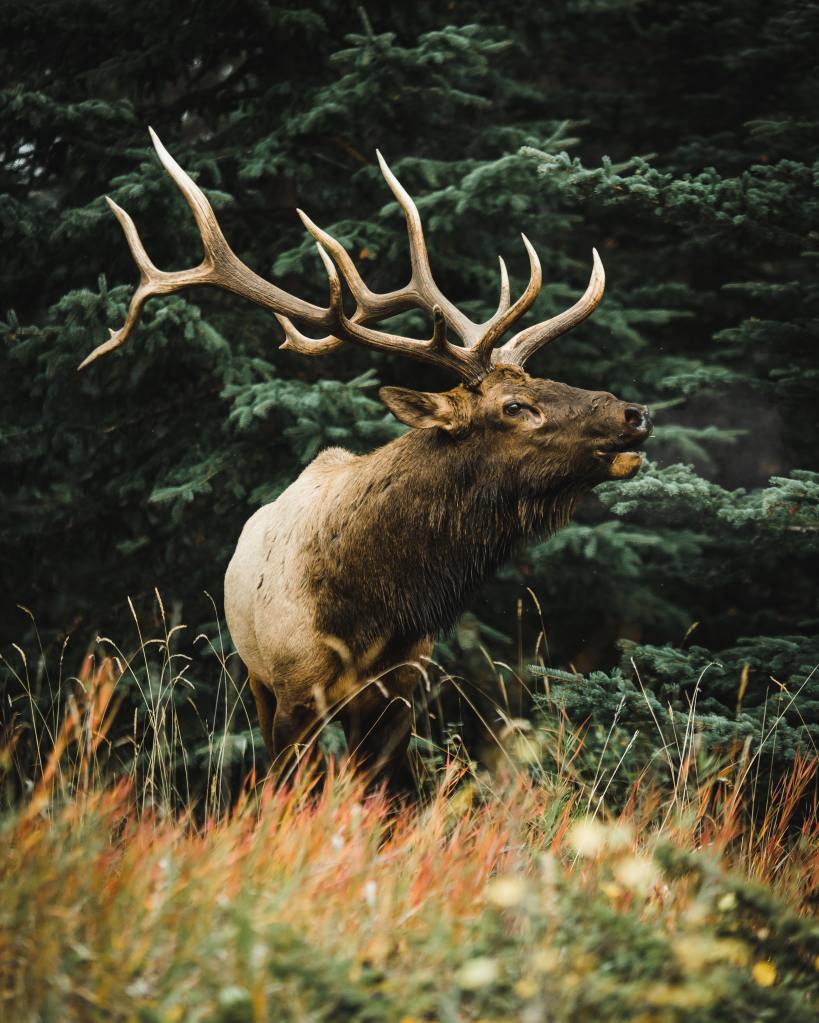
What exactly would restoration look like in your community? Well, it depends on the location. Perhaps it means planting native trees or removing impervious surfaces and replacing them with vegetation. Maybe it means removing a damn from a river to allow for a natural flow or cutting down on pollution coming from construction or agriculture. Maybe it means reintroducing large herbivores or carnivores onto a landscape, which is what several Appalachian states are doing with Elk. It could even mean the use of genetically engineering to restore endangered species, which is what some scientists hope to do with the American Chestnut in the Eastern US.

States are restoring animals like elk to their former range.
Photo by Andrew Ly on Unsplash

No matter where you live, there are probably groups who are working on projects like these right in your community. These groups are always looking for volunteers, and even small amounts of money can go a long way. If you have a yard, you have the opportunity to transform some of your lawn into native habitat. Lawns are an ecological disaster. They provide no habitat, absorb very little runoff, and sequester no carbon. Planting bushes or trees, native flowers, or growing vegetables are all more beneficial to the environment than keeping a manicured, uniform lawn.

But we have to think bigger than this as well. Ecological systems are big, interconnected, and complex. Climate change is a global problem, and we must tackle ecological restoration on a global scale, particularly because many of the most important places, like Brazil, Congo, or Indonesia, are poor countries with ineffective governments, who lack the financial resources to address their problems. It is incumbent upon the wealth nations of the world to finance ecological restoration in developing nations, particularly because rich nations are driving the extraction of resources which causes the destruction in the first place.

Ecological restoration and climate mitigation are not exactly the same, but progress on one will mean progress on the other. As we restore ecosystems, they help us mitigate the effects of extreme weather, and they sequester carbon. As we reduce our carbon emissions, we slow the destruction of our environment. This is referred to as a “feedback loop”. This means we can address two problems at the same time. It also means, however, that if we ignore one, we make it harder to address the other. We can’t separate these two things into different problems, they are two interwoven.