Hi, it’s been a while. I know I haven’t posted in a few weeks and I wanted to give you a small personal update and touch on a few of the things that have happened since my last post.
First, I should say that the reason for my absence is two-fold. I took on a new role at work starting in December, I was actually doing part of two jobs at once because they hadn’t backfilled my old role and there were some essential functions I did that only I knew how to do. The woman who recruited me to switch departments, and who was training me, suddenly turned in her notice in late January. So, for the last 3 weeks, I’ve been doing part of 3 jobs. I’m fortunate that people at my company have helped out, but there’s only so much they can do. Needless to say, I haven’t really had the energy to think, let alone write.
The second, more exciting reason, is that my wife and I bought a house, and I’ve been shopping for mortgages. We’re going to make a big announcement on social media next week, but we’re moving closer to our families and will be homeowners for the first time. It’s all very exciting, but as anyone who has ever bought a house can tell you, it’s also quite a lot of work.
The good news is, I see a light at the end of this tunnel. The mortgage stuff seems to be settled for now and we are flying down next week to look at our homesite (it’s a new construction project so we aren’t moving for a while). We finally hired my replacement and he started this week. I may end up getting a new manager sooner or later and I can focus on my actual job. However, I’ve learned that in the solar industry, nothing is constant and only fools predict the future. We call it the “solarcoaster” for a reason.
That being said, I’ve at least been paying attention. A lot has happened since my last post. Here are three climate things that really stood out to me.
The most obvious event is probably the war in Ukraine. While it isn’t the most important part of this conflict, we should keep in mind that EU reliance on Russian oil and gas is constraining its efforts to help Ukraine. In fact, without oil and gas revenues, Russia may not even be capable of the invasion. It’s just one more benefit to ditching fossil fuels. Nonetheless, we should also keep in mind that heating in the winter, especially in northern climates, is still a challenge for renewable energy. We need investments in things like green hydrogen and long duration energy storage to really break our reliance on natural gas.
The second thing that happened is the IPCC released the next part of its assessment. This is part 2 out of 3 and it was not exactly optimistic. We are not ready for the effects of climate, and the most vulnerable are also the least able to adapt. Poor, low-lying countries and communities, as well as arid places will bear the brunt of this. But, there was a glimmer of hope, if we radically reduce our emissions, we still have time to stave off a catastrophe. Though, even the authors admit that’s unlikely to happen.
There was also a report released by the US government regarding sea level rise. It said that US average sea level will rise by 10-12 inches in the next 30 years. That’s as much as the previous 100 years, representing a significant acceleration of sea level rise. I say “average” because it won’t be the same across the country, places like the Gulf Coast will see more (18-24 inches). It also predicted at least 1 more foot of rise between 2050 and 2100. That’s the best case scenario. The worst case is 7 total feet between now and 2100. Surprisingly, this actually represents an improvement. A few years ago, the worst case scenario was 8 feet. So, we are in fact moving the needle in the right direction, ever so slowly.
That’s all for now. I have no idea when I’ll get back to a regular schedule. It really depends on how everything plays out. I may move to a biweekly schedule or something like that, just to stay consistent.
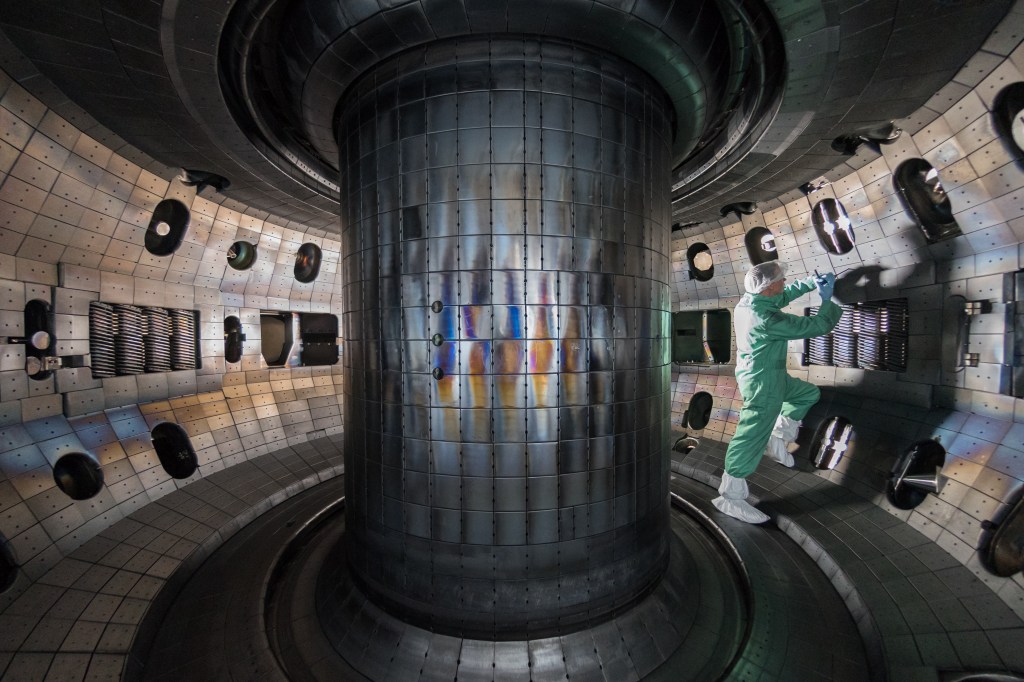
If you get news alerts for climate or energy, you may have seen a flurry of recentannouncements regarding nuclear fusion. Scientists in Europe and North America have made breakthroughs in recent weeks, using different techniques, in the quest for a stable, energy positive nuclear fusion reactor. These developments are tantalizing and exciting, but we should also keep things in perspective. Let’s be clear, commercial nuclear fusion reactors are still years away and given the time constraints, they may not have a serious impact on our climate goals. So, while these developments around fusion are unambiguously positive achievements, we should not count on fusion to save us.
As I’ve said before, we must focus on reducing emissions now. The danger with fusion is that we drag our feet on emissions reduction because we think this miracle tech is going to solve our problems, like some modern “deus ex machina.” That’s a recipe for disaster. At the same time, we should all want nuclear fusion to work. It’s truly a revolutionary innovation with the potential to address a number of problems, including climate change. So, my point is not to disparage these recent developments, I think we should be celebrating them, but the hype machine is running at full capacity and we’re in danger of losing our perspective.
First, let’s start with some basics. There are two kinds of nuclear energy production: fission and fusion. Fission involves splitting a heavy atom like uranium, which releases a large amount of energy. Fusion involves smashing together two light atoms, typically two hydrogen atoms, to form a heavier atom, in this case helium. Every nuclear plant on Earth uses fission, however, fusion is the thing that powers the Sun (and every other star as far as I know).
I’ve written before that nuclear fission is a perfectly viable zero-carbon power source and has some advantages over other power sources. But, it also has a number of challenges, namely perceived safety risk, price, and radioactive waste.
Fusion is one of those technologies that seems more appropriate for Star Trek than serious policy discussions. It seems too futuristic, too science fiction-y. But, it’s a very real technology with some pretty amazing potential. Part of the reason it seems too futuristic is because it always seems to be just over the horizon. Scientists have been working on a fusion reactor for decades, with relatively little progress for us outsiders to see. There’s a tired joke among energy nerds that “fusion is always 30 years away” because scientists seem to have been saying that for decades.
As an outsider who does not work in the industry and cannot appreciate the magnitude of recent technologic advancements, fusion still feels like it’s decades away. That’s an important caveat when reading my analysis, I am not qualified to assess the veracity of claims made about the technology, I can only go on what the experts say. My questions about fusion relate to things like timeframes and costs, rather than technological feasibility. By all indications, we’re marching steadily towards a working fusion reactor sometime in my lifetime. And that’s exciting!
Now, when people talk about fusion, they often use hyperbole. They will say things like “fusion can create near limitless power” which is silly. I think they say this because the fuel comes from sea water, and water is obviously quite abundant. The promise of fusion is that we will be able to get an enormous amount of energy from just a small amount of water. Further, not only is our planet covered in water, but Mars, Europa, and Enceladus all have abundant water reserves. So, we’d be set on fuel for many centuries. But, fuel is not the only limiting factor. We will need to build a fleet of these reactors, and as of right now, we don’t even know what materials we need to do that. Until we know exactly what we need to build these things, we should not assume that the materials will be cheap and abundant.
Assuming, though, that the materials are easy to obtain, we still have unanswered questions. The plants themselves would have a maximum capacity, so the question is, how much energy would a typical fusion plant produce? I have yet to see a good answer for this. The ITER project in southern France is the largest nuclear fusion reactor in human history. It’s been under construction since 2007, costs tens of billions of dollars, and when it finally comes online (supposedly in 2025), it will produce 500 Megawatts of power. That’s not a small amount of power, but it’s still less than a typical fission reactor. ITER is obviously an experimental station, and not meant to compete with commercial energy generation, but with all that money and material, we’re still talking about a fairly small amount of power generation. So the question remains, how much power will we get out of these reactors? That will tell us how many we need to build.
The next question is cost. Of course, as with any new technology, the cost of the initial projects will be astronomical. But, what is the expected cost per watt in say 2040? As an energy nerd, I know predicting energy prices 18 years out is a fool’s errand, but we should at least be reasonably confident that costs will be competitive in an acceptable timeframe. Remember that solar, wind, and energy storage systems are all getting cheaper every year and that’s likely to continue. Eventually fusion will need to compete with them on cost, but it will undoubtedly need a lot of government support to get there. Personally, I have no problem subsidizing fusion since it has enormous upsides. Without government support, the fusion sector would probably wither and die.
Perhaps most important is the timeframe for these things. This is pretty hazy right now. First we need to have a working fusion reactor, which is something we’ve been working on for decades and still don’t have. If it takes a few more decades, then it will be too late for fusion to impact our climate fight. But even if we get a working fusion reactor say in the next 5 years, it would still be decades before fusion reactors were producing power at scale.
Unfortunately, time is not on our side when it comes to climate. Ideally, the electricity sector will be mostly decarbonized by 2035. Fusion may or may not be available at by then, but it almost certainly won’t be at scale in 10 years (if it is, I’ll gladly eat my words since that would be an amazing achievement for our civilization). We need to be focusing on the solutions we have right now, while supporting fusion and other advanced energy technologies. Solar panels use rare Earth minerals and there may be an upper limit to how many we can really install. We never want to put all our faith in a single technology. This isn’t an either/or situation, we can support advanced energy technologies and implement our existing solutions.
So, let’s celebrate the wins on fusion, keep the research money coming and encourage these achievements, but we should not count on a technology that does not yet exist. Until we have a working commercial fusion reactor, we should not rely on it as one of our solutions. A tool isn’t a tool if it’s still being designed. Or, as we say, don’t count your chickens until they hatch.
If you take anything away from this post, it should be this, advanced energy technologies like nuclear fusion are fantastic ideas that are worth our support and we should celebrate their development. However, no single technology will save us, we are in a race against time, greed, and indifference and we’re losing. We must accelerate our existing solutions, we must cap our emissions as soon as possible and begin the long, laborious, and complex process of decarbonizing our civilization. We do not need new technologies to do this, and we should not wait for some innovation to swoop in and save us at the last minute.
Assuming we don’t see any developments on the BBB front, I will next explore green hydrogen and genetic engineering as climate solutions. Have a wonderful weekend and stay safe!
Today I’m starting a series on several emerging “miracle” technologies, all of which have the potential to radically improve our chances of avoiding a climate crisis, but none of which are currently available at scale. The first technology I would like to explore is called Direct Air Capture (DAC) of CO2. The very first “climate Friday” Facebook post I ever wrote was about carbon sequestration. DAC is a subset of that group, along with “carbon capture” and ecological restoration. Technically, DAC is a subset of a subset of carbon sequestration called carbon removal.
I’ve written before that there are no silver bullets, and I stand by that. No single technology or policy alone will save us, it’s going to take a whole suite of political and technological advancements to get us over the finish line. That being said, there are several technologies with some pretty powerful potential. Any of the tech that I’m going to explore over the next few weeks, could make it much easier to reach our carbon goals. I have not yet finalized my list, but I will be exploring green hydrogen, nuclear fusion, and DAC.
As I’ve written before, carbon sequestration is an essential part of a carbon negative economy, which is what we need as soon as we can get it. There are a few options for this, the first is habitat restoration, which revitalizes natural carbon sinks like grasslands and forests, the second is something called carbon capture, which uses technologies at the end of smoke stacks to prevent the carbon from reaching the atmosphere. Carbon removal, including DAC is a third option that involves machines which pull the carbon directly from the air and stores it, ideally in some useful form like a brick or other material.
The first two approaches are further along. We’ve been altering habitats for thousands of years at this point. But, in order to have an impact on climate change, we have to increase the worldwide capacity of natural carbon sinks. This means that for every carbon sink we destroy, we must restore an even larger carbon sink in order to increase our natural sequestration. However, this has a limit, we obviously can’t restore every forest on Earth (we need land for farms and cities and other uses), and even if we did, this isn’t a permanent solution. You see, natural carbon sinks have a limit to how much they can sequester. Once a tree reaches mature age, for instance, it stops growing (or slows down) and once it stops growing, it basically stops sequestering carbon at a meaningful rate. The carbon is has stored in its trunk and roots remains as long as the tree is alive, but it only sequesters more carbon as it’s growing. So, while a mature forest has a lot of stored carbon, it isn’t really sequestering much anymore since it isn’t doing a lot of growing.
Carbon capture is another technology, one which is often touted by fossil fuel companies because it seems like we can have our cake and eat it too. If we can sequester carbon directly from power plants, then why can’t we keep burning fossil fuels? Well, these technologies don’t trap all of the carbon, or even most of it. Maybe we can improve them, but that would likely drive up the cost of fossil fuels, making them less competitive compared to renewables which have a falling cost curve. I think we all want to fight climate at the lowest cost possible. We should not intentionally make the energy transition more expensive than it needs to be. So, while carbon capture is useful at the moment, it probably won’t make sense in the coming decades.
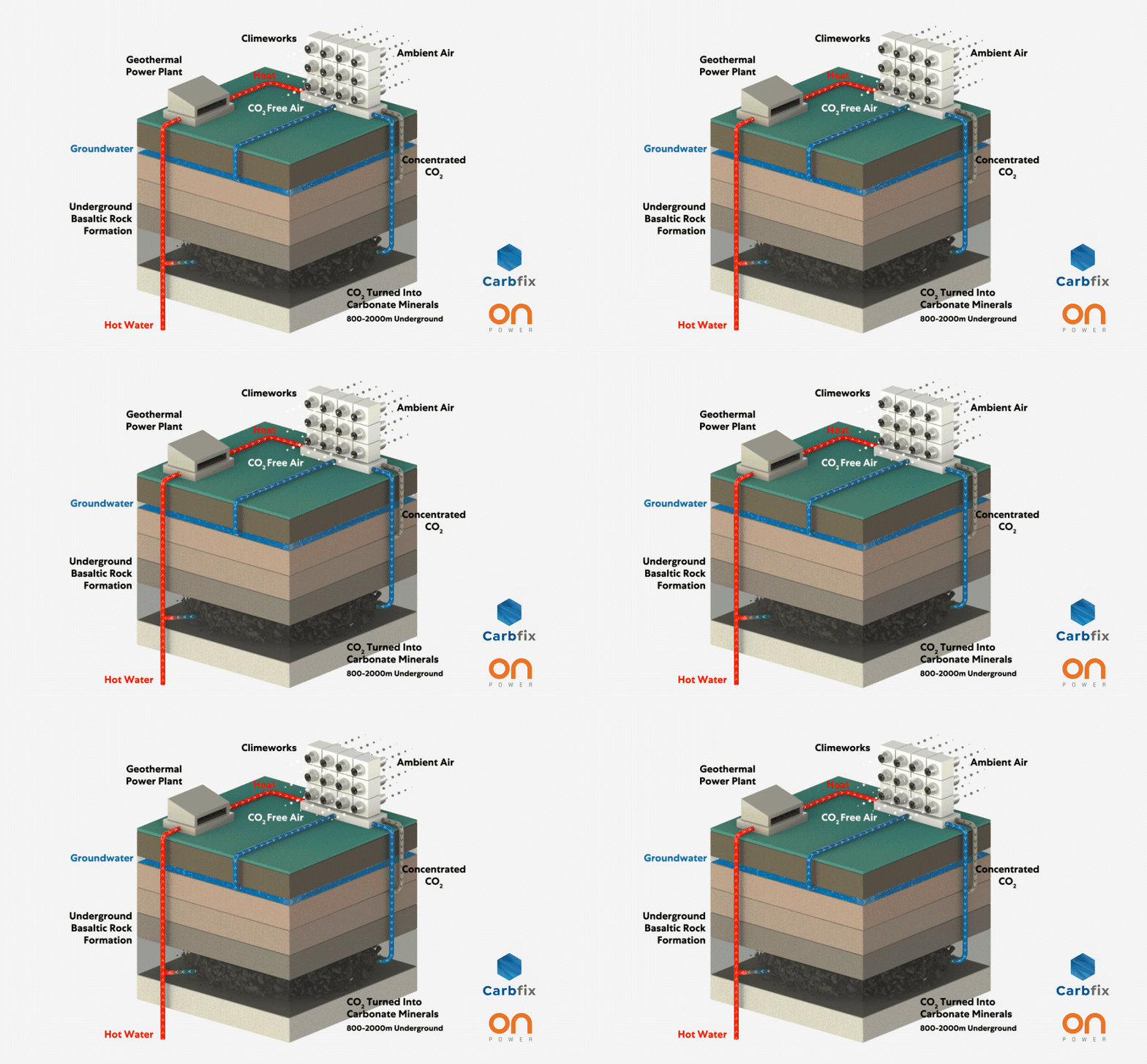
Direct Air Capture is something different entirely. The machines come in different forms, some look like a stack of box fans, others look a forest of petrified trees.
Artist’s rendering of the Arizona State University MechanicalTree Project.
They suck air in, remove the carbon, and then push the air out. They offer a tantalizing solution to a serious problem. After all, wouldn’t it be easier to just build a huge fleet of these instead of transitioning the whole economy over to new fuel sources? Maybe. But, time is not on our side.
You see, if it were 1950, we might have enough time to implement this solution at scale, but we have about 11 years left in our carbon budget, and scaling up an industry like this will take time. Over the course of a year, the entire DAC industry removes about 8 seconds worth of carbon emissions. Even if that doubles every year for 11 years, a blazing rate of growth, you’re talking about a few hours worth of emissions. Even if I’m off by an order of magnitude in terms of growth, it still isn’t going to be enough if we don’t reduce our emissions. And, if these machines give us a false sense of security we may end up increasing our fossil fuel use and erasing any gains made by DAC.
But, that doesn’t mean this isn’t worth doing. We don’t really need DAC to make a huge difference right now. Our primary focus should be on reducing emissions through electrification and renewable energy + nuclear power. DAC has about 30 years to grow to scale, because in the second half of this century, we will need to begin drawing carbon out of the atmosphere in enormous quantities. As I’ve written before, our goal is carbon neutrality by 2050 and then carbon negativity thereafter, until we reach a global CO2 PPM that scientists deem desirable (probably somewhere between 280 and 350 PPM).
It seems very unlikely that we will decarbonize every aspect of our economy over the next 30 years, so we will need some form of sequestration to fill in the gaps, and direct air capture is the only technology that promises perpetual carbon removal. Carbon capture will shrink as we phase out fossil fuels, and as long as the human population keeps growing, there will be a serious limit on how much ecosystem restoration we can do.
So, ideally, when 2050 rolls around, we will already have a fleet of these plants removing carbon cheaply and efficiently. That should be the focus of government policy in this area. We need public and private investment to improve the technology, to scale production, and to make it affordable.
In order to do this, we need either a price on carbon or a carbon tax, something that will create a market and demand for this service. Right now, the only reason anyone does it is because it’s good for the environment (and a company’s reputation), at least in the US. We need the government to either mandate that companies are carbon neutral, or for the government to tax the carbon in such a way that it’s more affordable to pay for direct air capture than to pay the tax. Without this, the industry simply won’t scale up. Companies and organizations will not voluntarily offset their emission in sufficient quantifies. We can use markets to make this happen, but we need the government to create the market in the first place. A so-called free market will do what it always does, pushes costs and pollution on to the general population wherever and whenever it can. But, a property designed carbon market, which an adequately high price on carbon, will likely be more efficient than a government mandate.
And remember, this is not an excuse to keep burning fossil fuels. This is not a miracle technology that will let us burn coal without consequences. We need both decarbonization and carbon removal. Direct Air Capture has the potential to be an extremely useful tool, and in fact it may be necessary at this point if we want to avoid a catastrophe, but it is not a replacement for clean energy. It is a complimentary technology.
As I’ve said before, the first and most important goal is to reduce and replace our reliance on fossil fuels wherever we can. Some industries, like heavy manufacturing, shipping, and commercial air travel will be very hard to decarbonize, and it may be necessary that we use some carbon removal to make them carbon neutral. But, in other areas like personal vehicles, building heat, electricity, and mass transit, we already have sufficient technologies to decarbonize these sectors. We do not need need to keep coal plants open, or internal combustion engines humming.
Fortunately, the Biden Administration is working to advance these technologies. The DOE announced in June of 2021 6 grants, 3 of which went to companies in my once and future home of North Carolina, that are working on carbon removal, including the mildly creepy project at Arizona State.
Ultimately, I feel quite optimistic about DAC. It is both a very clever and necessary invention. As with most climate issues, the fundamental challenges are time and politics, not resources or technology. With enough support, this industry can scale immensely and have a dramatic impact on our fight against climate change. But, without adequate support, it will remain a curiosity with lots of potential and little actual contribution.
As with all emerging climate technologies, DAC is not a miracle, it is the product of hard work and engineering, and it can’t solve the issue on its own. But, it can be an important tool in our toolbelt, something that can fill the gaps that renewables, alternative fuels, and other innovations can’t solve.
There is an excellent book and website called Project Drawdownwhich estimates the carbon impact of a whole range of activities. The purpose of the project is to find the most important actions we can take collectively to reduce the global carbon footprint. It’s a great resource for anyone who wants to see a simple ranking of the most important climate actions and an excellent starting point for anyone interested in doing something about climate change.
There are two scenarios on the website, Scenario 1 corresponds to 2 degrees C of warming by 2100, and Scenario 2 corresponds to 1.5 degrees C. Because I think it’s more realistic, I’m going to use the rankings in Scenario 1.
Of the top ten solutions listed, several of them are largely out of our control, but there are ways we can contribute to most of them.
Here they are, the ten most impactful actions we can take to combat climate change.
10. Distributed Solar PV – Literally what I do in my day job. This is industry jargon for “putting solar panels on your property.” Not everyone owns property, but there is something called community solar which allows people to buy into solar arrays even if they don’t have a good site or live in an apartment. For many people investing in solar can be both a financial and an environmental boon. Total impact: 27.98 gigatons of CO2.
9. Improved Clean Cookstoves – For those of us in the developed world, this may not be obvious, but hundreds of millions of people (mostly women and girls) use wood or other biomass like cow poop to cook their food. This has an enormous public health and climate impact. In fact, indoor air pollution from dirty stoves is one of the largest public health problems among the world’s poorest people. And we can all have an impact by donating to organizations like the Clean Cooking Alliance. Better cookstoves are a win for public health, for education (girls often gather fuel instead of going to school), for women’s equality, AND for the climate. Total impact: 31.34 gigatons of CO2.
8. Utility Scale Solar Photovoltaics – This is just jargon for big solar farms. The most important thing you can do here is get political. Vote for politicians to implement pro-solar policies. These kinds of decisions are made by legislatures and utility commissions. The policies around them are a bit complex, but organizations like SEIA and Vote Solar have voter guides that typically cover every state and federal election. If you’re outside the USA, then there is likely a solar industry association of some type in your home country that does the same. Also, I happen to work in the solar industry so feel free to reach out if you ever have questions. Total impact: 42.32 gigatons of CO2.
7. Alternative Refrigerants – This is another area where public policy is key. We need companies and government working in tandem to develop new refrigerants at scale and to phase out old ones like fluorinated gases. Unfortunately, I’m skeptical this will ever get much attention during an election and it’s unlikely to be at the top of anyone’s mind. Total impact: 43.53 gigatons of CO2
6. Onshore Wind Turbines – Wind energy is a mature industry here in the USA. Many states, particularly those in the middle of the country like Iowa and Texas, are already getting a large share of their power from wind. If left to its own devices, the wind industry would continue to grow over time, but in order for it to grow fast enough to hit our climate goals, we need robust public policy. The biggest danger here is politicians getting in the way or lying about wind energy, like many Republicans did after the Texas deep freeze of 2021. Total impact: 47.21 gigatons of CO2.
5. Tropical Forest Restoration – I assume that few of my readers currently live in the tropics. We all know that deforestation in places like Indonesia, the Democratic Republic of the Congo, and Brazil is a serious issue. These are also some of the poorest places on Earth, and the Tropics are in danger of getting too hot for human habitation over the next century. So, restoration of tropical forests has the potential for numerous positive impacts. The best way we can help is by giving money to organizations that fight against deforestation and empower local communities. Unfortunately, violence against environmental activists in these countries is not uncommon, and many people have been killed in recent years when they try to protect these forests. We should not turn a blind eye to this, not just for the climate, but for basic human decency. Total impact: 54.45 gigatons of CO2.
4. Refrigerant Management – Fortunately, this one is already moving in the right direction. In 2016, 170 countries met in Kigali, Rwanda to amend the Montreal Protocol, one of the most successful international treaties of all time. Countries will phase out the use of CFCs and HFCs over the next decade or so (which richer countries starting first and poorer countries going later). Total impact: 57.75 gigatons of CO2.
3. Plant-Rich Diets – This includes vegan and vegetarian diets, but it also includes diets that have meat but in lower amounts. Americans and other rich people eat a lot more meat and dairy than most sedentary people in human history. By simply reducing the meat and dairy portion sizes, or eating vegetarian for several days a week, we can have a huge impact on public health and the climate. Total impact: 65.01 gigatons of CO2.
2. Health and Education for Girls – This is another area where we can have a lot of positive impacts, not just for the climate. The goal here is 12-13 years of school for every child on the planet, and access to high quality birth control for everyone. This policy will have by far the biggest impact on women and girls, who make up the majority of the human species and yet are denied access to healthcare and education across the planet. Gender equality is a moral imperative in its own right, we don’t need other justifications. However, nearly every social and environmental issue, including climate change, is exacerbated by gender inequality. The positive impacts from gender equality are honestly too numerous for me to list. There are a large number of organizations in this space, such as the Malala Fund. Total climate impact: 85.42 gigatons of CO2.
Reduced food waste – In some ways this is the easiest thing for us to impact. We all waste food, especially in the United States, and we can all do a better job here. But food waste is not just about us forgetting something in the back of the fridge, it’s also about public policies that lead to crops rotting in the fields, and cultural practices that lead to edible food being discarded for its appearance. Food waste is a pretty complex topic, and it might make sense to start with a book like Waste: Uncovering the Global Food Scandal. Total impact: 90.70 gigatons.
Some of these solutions may be surprising, since we tend to think of climate change solely through the lens of burning fossil fuels. But these solutions undermine just how simple, and complex, this problem is to address. I strongly recommend Project Drawdown to anyone who is interested in the full list. There are 82 solutions listed on the website. The book has a summary of each solution and it’s quite easy to understand. Rather than focusing on the negatives, there is a very solutions-oriented approach that presents climate as a complex but solvable issue.
That’s all for this week, stay warm and have a great weekend!
One of my goals for 2022 is to read *at least* one climate book a month. Here are the 12 books I’ve put on my “to read” list for the year. They are fiction and non-fiction, some are climate specific, while others are about broader environmental or sustainability topics. I hope there’s at least one book on this list that appeals to you. They are not written in any kind of order.
There’s not necessarily a logic to the books I’ve chosen, they’re just the ones that look most interesting to me. There are dozens of interesting climate books out there and even if you don’t read any of these, I’d encourage you to look for a book that appeals to you. Whether you want to learn more about the science, or some specific implication of climate change, whether you want to read a contrarian opinion or you want to learn how to talk with your kids about it, there are books out there.
The Uninhabitable Earth by David Wallace-Wells – This book explores some worst-case scenarios for climate. Written by a novelist, it created quite an impact when it was published in 2019.
All We Can Save – Perhaps the antithesis if Well’s work, this is an anthology of stories about hope and climate. I believe all of the stories were written by women.
Half Earth by E.O. Wilson – The late Harvard professor was a champion of biodiversity. He was also my commencement speaker when I graduated college. He advocated for habitat conservation for most of his life, and proposed that we set aside 50% of the land and water for nature.
TheMinistry for the Futureby Kim Stanley Robinson – The acclaimed novelists’ most recent work has shown up on a number of “best climate book” lists. This “Cli-fi” novel was published in 2020 and follows characters as they attempt to prevent the worst of climate change.
The Future We Choose by Christiana Figueres and Tom Rivett-Carnac – From the lead negotiators at the 2015 Paris Climate Summit, they present their vision for meeting the Paris goals and discuss the consequences if we fall short. I suspect this is will be the most approachable of the books. If you’ve never read a climate book before, it may make sense to start with this one.
Don’t Even Think About It: Why Our Brains Are Wired to Ignore Climate Change by George Marshall – Published in 2014, this book explores climate psychology. There are still millions of people who deny the reality of climate change, and hopefully this book can shed some light on how we can get through to them.
Storming the Wall: Climate Change, Migration and Homeland Securityby Todd Miller: The UN estimates that there may be as many as 1 billion climate refugees by 2050. That number dwarfs all previous refugee crises and our systems simply aren’t prepared to handle it. The vast majority of these people will be come from poor tropical countries and threaten to overwhelm temperate climate havens.
Saving Us: A Climate Scientist’s Case for Hopeby Katharine Hayhoe: One doesn’t usually associate evangelical Christianity with climate action, but that’s exactly who Katharine Hayhoe is. In fact she’s often accused of being a false Christian because of it. This books is specifically aimed at climate activists who are trying to connect with so-called climate skeptics, particular if they are conservative Christians. Hayhoe argues that the messenger is often more important than the actual message. Someone without credibility will never be convincing.
Regeneration: Ending the climate crisis in on generation by Paul Hawken – A sequel to Hawken’s book Drawdown, this book goes beyond net zero emissions and into something he calls the “regeneration” movement. I suspect this will be the most ambitious and optimistic of all the books on the list.
The Good Ancestor: How to Think Long Term in a Short-Term World by Roman Krznaric – Climate change is a multigenerational problem. We will not see the full effects in our lifetimes, whether we do everything right or we completely fail. Our cultural outlook has become extremely short-term, and it has pretty significant consequences. Long-term thinking has a rich history in many cultures around the world, but it’s sadly lacking in our modern, hectic, American-style culture that predominates at the moment.
Doughnut Economicsby Kate Raworth – This may be the most technical book on the list. I’ve seen Raworth speak about her theory, which is simple in principle if not in practice. Imagine the world is two concentric circles. The smaller circle represents the minimum amount of resources needed for everyone on earth to have a decent standard of living. The larger circle represents the maximum resources we can use sustainably. The goal is to stay between those two circles, this area is referred to as the doughnut.
I’d be very interested to know if anyone reads these and what their opinions are.
Next week I plan to discuss the most important climate actions we can take as individuals.
That’s all for now, stay safe and have a nice (long) weekend.
I hope all of you had a wonderful holiday season, even if you don’t celebrate any late December holidays. I enjoyed some much needed time with family away from my normal routines. I want to express my deepest gratitude to anyone who reads this blog and I hope we can grow that readership in 2022.
2021 was certainly a pretty intense year, and not just for the climate. Joe Biden took over as president with the promise of taking serious climate action, but right now we’re still waiting. The weather was predictably chaotic. We had numerous reminders that the climate is destabilizing at an alarming rate. Events like the deep freeze in Texas and the heat waves in the northwest showed us what happens when abnormal weather collides with outdated infrastructure.
We also received several new scientific reports, including the 6th IPCC assessment on the state of the climate. The Secretary-General of the UN referred to the report as a “red alert” for our civilization. We learned that the ocean’s currents may be in danger of collapse, and the Greenland Ice Sheet may already be doomed. COP26 came and went without any big revelations. Right at the end of the year, we learned that something nicknamed the “doomsday glacier” may collapse within 5 years. We also got an excellent climate comedy to entertain and possibly frighten us a little on Christmas Eve.
We saw some good news as well. The arrival of the electric pickup truck in America was a smashing success. Renewable energy had a banner year. We saw advances in carbon-free steel and cement, as well as a plethora of new meat alternatives. The private sector is racing ahead on climate solutions, even as the federal government drags its feet.
Over the break I’ve been thinking about what’s next for the blog. If BBB is passed, then we’ll talk about it, but if it doesn’t then we’ll move on. I’m already sick of the process. That being said, there is still a lot of action happening on the climate front. I will begin the year by breaking down the most important actions we can take as individuals, and the most important solutions we need to implement as a society. These will be based on numerous reports and books, especially Drawdown by Paul Hawken.
While I will be covering any major scientific updates and climate events, I will do my best to stay positive and relevant. I would be lying if I said I felt optimistic about the future, and that’s obviously going to show in my posts. But, I hope to provide solutions-based posts that can help you prepare for the future.
We should remember that there is no point of no return. Things can always get worse and there is always a benefit to taking action. We want to avoid 1.5 degrees C, that seems pretty unlikely at this point. Maybe we can stop at 2 degrees, maybe we can’t. But 2.5 is better than 3, and 3 is better than 3.5. As a species we are extremely adaptable. Cooperation and adaptability are the things that made us the dominant force on this planet, and those attributes will be essential if we’re going to flourish in this changing world.
Another theme I’d like to explore this year is a bit more abstract, involving geologic time. I believe we have entered a new geologic epoch called the Anthropocene. While still unofficial at this point, I think the evidence is pretty strong. Granted I’m in no way qualified to make a scientific assessment. However, between altering the climate and causing the 6th mass extinction in Earth’s history, there’s little doubt that humans have driven nearly all the major changes on this planet over the last 200 years.
There isn’t a square inch of this world, from the depths of the Mariana Trench to the top of Mount Everest that hasn’t been impacted by humans. We now have the power to completely destroy our home or to build a durable, sustainable civilization. We are going through something I call the Great Bottleneck and how we make it through may determine the future of our species for the next few centuries or perhaps even longer.
If I have one purpose with this blog, it’s to do something, no matter how small, to bring us closer to sustainability. The future I envision is something like the Star Trek universe. I know I’ll never see it, but hopefully, if we work together, we can set the foundation for our descendants to build a world based on science, morals, and equity.
So, here’s to a happy, prosperous 2022. I’ve made a few personal resolutions, like learning to play the keyboard, becoming fluent in Italian (something I started early last year as a COVID project), and quite possibly buying a house. I’m sure we’re all hoping 2022 is a bit less chaotic and stressful than the last 2 years.
In the environmental movement there tends to be a lot of hyperbole. Everything seems like a catastrophe and I think we all have a tendency to tune it out. If everything is terrible, then terrible is normal. But, truthfully, the next 8 years are critical. Ideally we would hit carbon neutrality by 2050. There is a specific amount of carbon we can burn and still stay under 1.5 degrees C (called our Carbon Budget). We’re currently on pace to spend our carbon budget by 2030, and our spending is increasing. Without major changes in the next 8 years, we simply won’t hit our targets and 2 degrees becomes a best case scenario.
Next week I will reveal my initial climate reading list for 2022. If there’s a good (or bad) climate book you’ve read, I’m always interested in recommendations.
Thanks again. Here is hoping that 2022 is the year we put COVID-19 in the rearview mirror, and we finally get some serious climate legislation.
Hello, just a short post today. I’ve decided to take a break from writing posts. I feel like the quality has gone down and I wasn’t really aware of how much work this would be when I got started. I plan to work a bit on the layout, and put together a plan for new content for 2022. Tentative return date will be the first Friday in January.
To be honest, when I started this blog, I was reading about climate all the time, probably too much. It took a toll on my mental health because the headlines can be pretty bleak. I hope to come back with a new tone and a new plan for interesting, engaging, and informative posts.
Happy Holidays to everyone, I will be traveling to see family for Christmas, something I look forward to with great anticipation. Last year we obviously stayed home and it was simply not the same.
Much love to everyone who has ever read a post here and here’s wishing everyone a safe and happy holiday season.
Hello! I have a short post today. Hopefully I’ll be back with more in-depth content in the near future.
As part of the transition away from fossil fuels, we will see the growth a number of new kinds of energy production, including offshore wind. The US is pretty far behind other countries when it comes to this, but things are moving pretty quickly now. Every state from Maine to North Carolina is developing offshore wind projects.
Offshore wind has a lot of advantages but there are also challenges. Let’s start with the good.
First, offshore wind turbines are much larger than their onshore competitors. New offshore wind turbines being developed are 3x the height of the Statue of Liberty, and they produce 14-15 megawatts of power. One of these turbines could power over 1,000 homes. The height of the turbines is also beneficial because winds are more consistent higher in the atmosphere. New offshore wind turbines have a capacity factor of over 60% (compared with about 30% for onshore projects). This means they produce more electricity more consistently than other renewable sources (other than hydro electric). Offshore wind can also be sited relatively close to major population centers. Cities like Boston, New York, Philadelphia, and DC all have major space constraints, but there is plenty of room offshore. These farms are typically about 15 miles from the coastline. Given the diffuse nature of renewable energy, it’s unlikely that our big coastal cities can decarbonize without some significant offshore wind (unless they switched over to nuclear, which has its own challenges).
However, there are a lot of challenges. First, perhaps not surprisingly, offshore wind is more expensive than other renewables. Some of this is just normal, since it’s more difficult to build big infrastructure in the ocean than it is on land. But some of it is because America doesn’t have the experience or the supply chain. As the industry grows in this country, costs will come down. In addition to the turbines themselves, we need oceanic transmission infrastructure (i.e. power lines under the water) to connect the farms with the users on land. These facilities are going to produce a lot of electricity so we’ll need pretty robust transmission infrastructure which doesn’t exist at the moment.
There are also some ecological concerns related to fish and wildlife, as well as concerns from commercial fisherman and coastal landowners. These issues can be resolved, but they should not be ignored.
Right now, most of the best area for offshore wind is on the east coast, because there is more available continental shelf. Offshore wind turbines are currently attached to the ocean floor. But, floating wind turbines will open up the west coast for development there as well.
The advances in this area are pretty exciting, but the costs, siting, and occasional opposition threaten this nascent industry. Some coastal communities that relied on fishing may be revitalized as this industry grows. Here in Massachusetts, the town of New Bedford is the focal point for the new offshore wind infrastructure, and other towns in other states are doing the same thing.
Hello! Sorry for the week off, things kind of got away from me. I need to get better at writing “get ahead” posts so that won’t happen again.
This week, Thanksgiving has me thinking a lot about food, mostly about all the delicious things I’ve eaten, but also a little about food and climate. As I mentioned previously, our food system is a significant source of carbon emissions. The most effective way to lower your carbon footprint is to eat less animal protein (meat and dairy) and opt for more plant-based meals. (by the way, I’ve often seen some people claim that “local, organic food” is better for climate, but that probably isn’t true, I’ll discuss that in a future post).
However, today, I want to write about the way in which climate will impact our food supply. First things first, if you are a middle class person in a wealthy country, you probably won’t need to worry about famine or food security. It’s true that climate change will negatively impact the global food supply, and there likely will be an increase in famine, but it will mostly hit poor people living in the tropics. As with pretty much everything else, the greatest burden will fall on those who can least afford it. This is an unfortunate reality, one that we should all remember when we vote. Countries who have sufficient food should do what they can to prevent famine. Places like East Africa, which already deal with famine on a regular basis, will likely suffer the most.
This means that we need to build a more resilient food system for the whole human population. This means more global cooperation and less isolationism. It also means embracing traditional methods AND advanced technology like genetic engineering. Too often we see fearmongering over things like GMOs and “conventional agriculture” that play fast and loose with the facts. That’s why we need robust public infrastructure that can evaluate the safety of things like GMOs and allow for the responsible usage.
But, as individuals, there isn’t much we can do to solve a crisis on the other side of the world, apart from donating and voting for politicians who will do something about it (and protesting when they don’t). We can do a lot more about our personal food resiliency, particularly if you live in a suburb and have a yard.
As I said before, middle class people in wealthy countries probably won’t face starvation, but that doesn’t meant we won’t see shortages of certain things. I’m sure we all remember the early days of the pandemic, when people were hoarding toilet paper and flour and all sorts of other things. And we see the effects of the global supply chain backlog right now. Most Americans are used to eating food that’s grown either in a different part of the country (particularly if you live outside of California) or on another continent. We are used to eating fresh fruits and vegetables all year long. Wintertime peaches rely on a supply chain that connects South America or Mexico with your local grocery store. Climate change will make some areas less fertile, and other areas more fertile. It will impact the supply chains in a significant, way, and certain crops (like chocolate or coffee) may simply become less common (and more expensive).
This means that if we want fresh fruit and vegetables, or eggs, or even meat, we may need to produce some of this ourselves. I know most people aren’t going to start raising pigs, but if you have space, pretty much anyone can plant a garden. If we want to stay resilient in times of shortages and possible hoarding, then we can plant, preserve and store our own produce. This kind of resiliency can range from a simple garden meant to supplement our veggies and herbs, all the way to a modern “homestead” with livestock, grains, fruit, and other foodstuffs. There are something like 30 million acres of cultivated grass (lawns) in the US. That’s enough space to grow a lot of food.
Building food resiliency also means building systems to protect those without food. This means investing in robust public infrastructure. It also means, when things are bad, don’t hoard. Hoarding makes a bad problem worse and it’s usually a waste of time. We’re in this together and in times of crisis we should try to be selfless.
I hope everyone had a great Thanksgiving and nobody injured themselves in a mad Black Friday rush.
When we read about efforts to combat climate change, we often hear certain technologies praised as the only viable solution to the problem. This refrain is often heard when people talk about nuclear power, either “small, modular nuclear fission” or nuclear fusion. I’ve also heard it with reference to sustainable airline fuels, hydrogen, lab grown meat, and carbon capture and storage. There are people who insist that a 100% renewables grid is the only way to go, and others who call this a pipe dream. It can be pretty maddening at times. The reality is that no single technology is going to save us.
In fact, technology really isn’t even the main issue. A system that allows gross overconsumption of resources, particularly by a tiny percentage of extremely wealthy people, is never going to be sustainable. There is no magic technology that’s going to allow us to continue consuming at our current levels indefinitely.
The reality is, we need to change our consumption behaviors, and invest in research and development. We need to implement the solutions we have now, while developing new ones. We must focus on systemic changes and work within the systems that already exist.
This idea of a silver bullet reminds me of the Ancient Greek dramatic concept of “deus ex machina” in which a god of some type swoops down at the last minute to save the protagonists. It’s comforting to think that really smart people are inventing something that will save us all. We like to believe that our current personal behaviors are not the problem, and that we can pretty much go on living as we’ve always gone and everything will be fine. This is a fantasy.
Unfortunately, behavior change is unlikely to come voluntarily. Either through government coercion or, maybe worse, natural disasters and resource shortages, we will be forced to change the way we live. The sooner we understand this, the better it will be for everyone.
When we look at the conversation around climate change, a lot of people like to push these magic technology fixes. It’s not surprising, since most of them are personally invested in the fossil fuel economy. Someone like Joe Manchin who personally makes over $300,000 a year from fossil fuel investments is not going to give that money up without a fight. He continues to push this idea that we can innovate our way out of the crisis and continue to burn fossil fuels. Noted crank Bjorn Lomborg made the same argument in his book Cool It. These guys think that we can innovate our way out of anything.
Maybe they’re right. But if they’re wrong, we’re all screwed. You can think of it like a Pascal’s Wager for the climate. The only logical way to move forward is to assume there are no magic fixes. No nuclear fusion, no economic carbon capture, no zero carbon jet fuel, or any other too good to be true innovation that will solve the crisis. We don’t want to be in a situation were our technological salvation doesn’t come. At the same time, we should continue to invest in R&D for climate tech. Zero carbon jet fuel, Carbon Capture and Storage, Nuclear fusion, these are all great things and if they existed at scale, they would be extremely helpful. The point of this post isn’t to denigrate innovation, the point is that we can’t rely on solutions that don’t exist yet.


 The Mangrove